
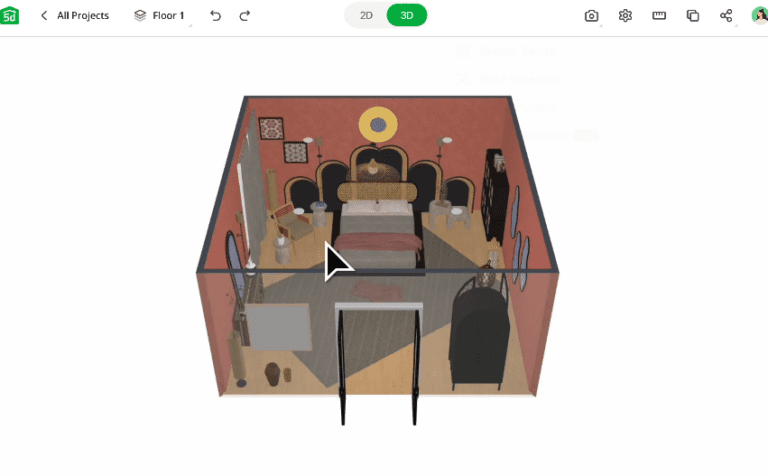
The Evolution of Interior Design in the Digital Age
Interior design has undergone a remarkable transformation over the past two decades. What was once a profession limited to hand drawn sketches, physical mood boards, and costly revisions has now become a dynamic digital experience powered by advanced software and immersive visualization tools. Technology has redefined how homeowners, architects, and design enthusiasts conceptualize and execute their ideas. In this rapidly evolving landscape, platforms like Planner 5D have emerged as powerful tools that bridge the gap between imagination and reality. The traditional design process often required clients to rely heavily on imagination when reviewing floor plans or two dimensional drawings. Many struggled to visualize how a finished space would truly look and feel. Digital design platforms have eliminated that uncertainty by introducing three dimensional modeling and realistic rendering capabilities that allow users to explore spaces before they are built or renovated. The integration of intuitive interfaces with sophisticated design technology has made professional level design accessible to everyday users. Instead of needing advanced training in architecture or computer aided design, individuals can now create detailed layouts with simple drag and drop functionality. This democratization of design has empowered millions to take control of their living spaces. Planner 5D stands at the forefront of this revolution, offering a seamless environment where creativity meets precision. It reflects the broader shift toward digital transformation in home improvement, where visualization tools not only inspire creativity but also reduce costly mistakes and accelerate decision making. As living spaces become increasingly personalized, digital platforms provide the flexibility required to experiment with different styles, layouts, and furniture arrangements without physical constraints. The evolution of interior design in the digital age is not merely about convenience; it is about enabling deeper creative exploration and delivering confidence in every design decision.
Bridging Imagination and Visualization With Advanced 3D Tools
One of the greatest challenges in interior design is translating abstract ideas into tangible outcomes. A color palette, a concept board, or a rough sketch can only communicate so much. True understanding often requires seeing a space from multiple angles and under realistic lighting conditions. This is where three dimensional modeling becomes transformative. Planner 5D leverages advanced 3D visualization tools that allow users to walk through their projects virtually, offering an immersive experience that closely mirrors real life perception. Instead of imagining how a sofa might look against a particular wall, users can place it within a virtual room and observe proportions, spacing, and harmony instantly. The ability to rotate views, zoom in on details, and switch between two dimensional and three dimensional modes provides flexibility that traditional methods cannot match. Lighting simulation further enhances realism by demonstrating how natural and artificial light interact with surfaces, textures, and colors. This feature is particularly valuable because lighting can dramatically alter the mood and functionality of a space. Through accurate rendering technology, materials such as wood, marble, glass, and fabric appear lifelike, enabling more informed design choices. Visualization also fosters experimentation. Users can test bold color combinations, rearrange layouts, or explore alternative design styles without fear of permanent consequences. By offering a safe environment for trial and refinement, Planner 5D encourages creativity while maintaining practical feasibility. This bridge between imagination and visualization reduces misunderstandings between clients and designers and ensures that final outcomes align closely with initial expectations. The result is a smoother design journey characterized by clarity, collaboration, and confidence.
User Friendly Design Meets Professional Precision
Accessibility is a defining feature of modern design software. While professional architects may rely on complex technical programs, everyday users often seek tools that are intuitive yet powerful. Planner 5D successfully balances simplicity with depth, providing a platform that welcomes beginners while satisfying advanced users. The interface is structured to guide users naturally through the design process, from drafting floor plans to furnishing rooms and applying finishes. Drag and drop functionality allows walls, doors, windows, and furniture to be positioned with ease, eliminating the steep learning curve associated with traditional drafting software. Despite its simplicity, the platform maintains professional grade accuracy. Users can input precise measurements to ensure that layouts reflect real world dimensions. This combination of ease and precision is particularly beneficial for renovation projects where spatial accuracy is critical. The extensive catalog of furniture, decor items, and materials further enhances versatility. Whether designing a minimalist apartment, a contemporary office, or a cozy family home, users have access to a wide range of customizable elements. Each item can be adjusted in size, color, and texture, allowing for a highly personalized result. The software also supports cross platform usage, enabling projects to be accessed from desktops, tablets, or smartphones. This flexibility ensures that inspiration can be captured and refined anytime, anywhere. By removing technical barriers and focusing on user experience, Planner 5D transforms complex design processes into engaging creative journeys. It empowers individuals to think like designers while maintaining the precision required for real world implementation.
Enhancing Collaboration and Decision Making
Interior design often involves collaboration among homeowners, family members, contractors, and professional designers. Effective communication is essential to ensure that everyone shares a unified vision. Traditional methods such as paper sketches or static images can lead to misunderstandings or misinterpretations. Three dimensional visualization significantly improves collaborative dialogue by providing a clear and interactive representation of ideas. Planner 5D enables users to share their projects digitally, allowing others to view and provide feedback in real time. This shared visual reference reduces ambiguity and streamlines discussions about layout adjustments, material selections, and furniture placement. Clients can better articulate their preferences when they see options presented visually rather than described verbally. Contractors benefit from accurate representations that clarify structural details and measurements. Decision making becomes faster and more confident because stakeholders can evaluate alternatives side by side. For example, comparing two different kitchen layouts or experimenting with various flooring materials becomes a straightforward process within the platform. The ability to simulate different scenarios before committing to purchases or construction helps prevent costly revisions. In addition, digital storage of design files ensures that projects can be revisited and modified as needs evolve. This adaptability is particularly valuable in long term projects where requirements may change over time. By fostering transparent communication and interactive engagement, Planner 5D enhances teamwork and ensures that design outcomes reflect collective aspirations. Collaboration becomes less about compromise and more about shared creativity guided by clear visual evidence.
The Future of Interior Design and Immersive Innovation
The trajectory of interior design technology points toward increasingly immersive and intelligent experiences. As virtual reality and augmented reality continue to advance, users will be able to step inside their designs with even greater realism. Planner 5D is part of this forward looking movement, continuously integrating innovations that refine the design process. Artificial intelligence is beginning to play a role in suggesting layouts, recommending color schemes, and optimizing space utilization based on user preferences. Such features streamline the creative process while maintaining room for personal expression. Sustainability is another area where digital design platforms contribute meaningfully. By enabling users to experiment virtually, they reduce material waste associated with trial and error renovations. Designers can evaluate energy efficiency, natural light flow, and spatial functionality before construction begins. The integration of smart home elements into digital models further reflects contemporary living trends. As homes become more technologically integrated, design tools must adapt to accommodate new functionalities. The future also holds greater customization through expansive digital catalogs and partnerships with real world furniture brands. Users may soon be able to purchase items directly from within their design environment, creating a seamless transition from concept to reality. Education and professional training are also benefiting from immersive platforms, as students gain hands on experience in simulated environments. Ultimately, the continued evolution of tools like Planner 5D signals a shift toward more inclusive, creative, and efficient design ecosystems. By merging technological innovation with human imagination, the platform exemplifies how digital solutions can transform interior ideas into vivid three dimensional realities that inspire confidence and creativity in equal measure.