
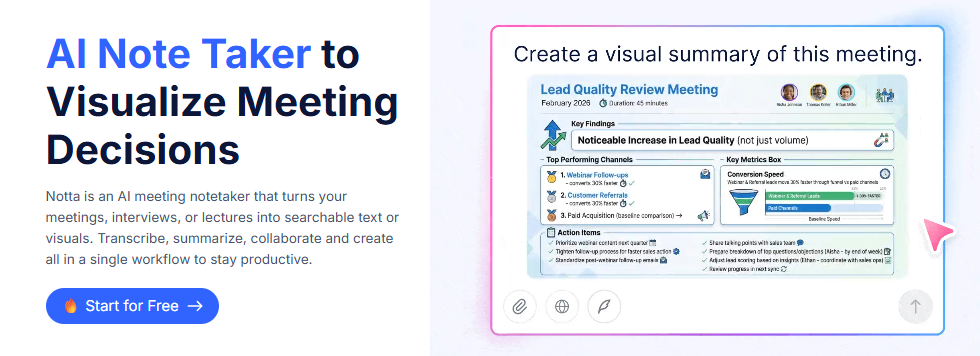
Transform Everyday Communication and Productivity with Notta
Modern communication creates a huge amount of information every day. From business meetings and online discussions to interviews, lectures, brainstorming sessions, and personal conversations, people are constantly listening and processing new ideas. Remembering every important detail can be difficult, especially when several activities happen at the same time. Notta offers a convenient way to capture spoken information and turn it into useful digital content.
By supporting transcription and note-taking workflows, Notta can help users spend less time manually writing information and more time focusing on conversations. A structured approach to capturing information can make it easier to review discussions, organize ideas, and keep important details accessible.
Simplify Your Daily Note-Taking with Notta
Taking detailed notes during a conversation can be distracting. When people focus heavily on writing, they may miss important comments, questions, or ideas. This is particularly common during fast meetings or detailed presentations.
Notta provides a digital approach to note-taking that can help users capture spoken information while remaining focused on the conversation. Instead of trying to write down every sentence, users can concentrate on listening and participating.
Digital notes can also be easier to organize than traditional handwritten pages. Once information is available in written form, it can be reviewed and arranged according to the user’s workflow.
This can make Notta useful for professionals, students, researchers, and anyone who regularly needs to remember information from conversations.
Keep Better Records of Important Meetings
Business meetings can involve many topics within a short period. Participants may discuss project updates, deadlines, responsibilities, ideas, and future plans. Remembering all of these details afterward can be challenging.
Notta can support meeting documentation by helping users capture and transcribe conversations. Having a written record can make it easier to review what was discussed and identify important points after the meeting.
This can also support follow-up work. Team members can revisit discussions when completing assigned tasks or preparing for another meeting. Instead of depending entirely on memory, they can refer back to documented information.
For people who attend several meetings each week, maintaining a consistent digital record can contribute to a more organized work routine.
Convert Conversations into Searchable Information
Spoken conversations contain valuable information, but finding one specific detail in a long recording can take time. Transcribed content provides a practical alternative because written information can be reviewed more quickly.
Notta can help turn conversations into text, giving users a useful way to work with information after it has been captured. A written transcript can be easier to scan when looking for particular topics, statements, or ideas.
This can be especially helpful for interviews and research. Instead of repeatedly listening to a complete recording, users can work with the available text and focus on the sections that are most relevant to their project.
Turning spoken content into written information can therefore make large amounts of communication easier to manage.
Support Students and Online Learning
Learning increasingly takes place through digital platforms. Students may attend online lectures, virtual classes, study groups, and educational discussions where important information is delivered verbally.
Notta can support students by helping them capture information from learning sessions and review it later. Written notes can provide an additional resource when preparing for assignments, exams, or projects.
Students can also use a transcription-based workflow to organize information from discussions and interviews. Instead of relying exclusively on memory, they can return to their notes when they need clarification.
This approach can make learning more flexible because students can review important information according to their own schedules and study preferences.
Make Interviews and Research More Efficient
Interviews are an important part of many professional and creative activities. Journalists, researchers, marketers, recruiters, content creators, and business professionals may all need to conduct conversations and preserve the information discussed.
Writing notes while interviewing someone can sometimes interrupt the natural flow of the conversation. Using Notta for transcription can help users stay engaged while creating a written record for later reference.
Researchers can use transcripts when organizing responses and identifying important themes. Content creators can review interview conversations while preparing articles, videos, podcasts, or other projects.
This can reduce the manual effort associated with creating written records and allow users to spend more time analyzing and developing the information they collect.
Improve Team Collaboration and Information Sharing

Good collaboration depends on clear communication. When important discussions are not documented properly, team members may have different understandings of decisions or responsibilities.
A structured transcription and note-taking workflow can help teams maintain clearer records of conversations. Notta can be useful when information from meetings needs to be reviewed by participants or referenced later.
Documented discussions can help team members stay aligned with project updates and important decisions. They can also be useful when someone was unable to attend a meeting and needs to understand what was discussed.
By making information easier to access and review, digital documentation can contribute to more organized collaboration.
Build a More Efficient Productivity Routine with Notta
Productivity is often improved by simplifying repetitive tasks and creating better systems for managing information. Notta can become part of such a system by helping users capture conversations, create written content, and review important information more efficiently.
Whether the goal is managing business meetings, supporting online learning, conducting interviews, organizing research, or preserving useful conversations, digital transcription can reduce the pressure of manual note-taking.
The biggest advantage of an organized information workflow is that important ideas do not have to depend entirely on memory. Users can create records that are easier to revisit and incorporate into their daily tasks.
As communication continues to become more digital, having practical tools for managing spoken information can be valuable. Notta offers a convenient way to bring transcription and note-taking into everyday workflows, helping users turn conversations into organized information and make better use of their time.